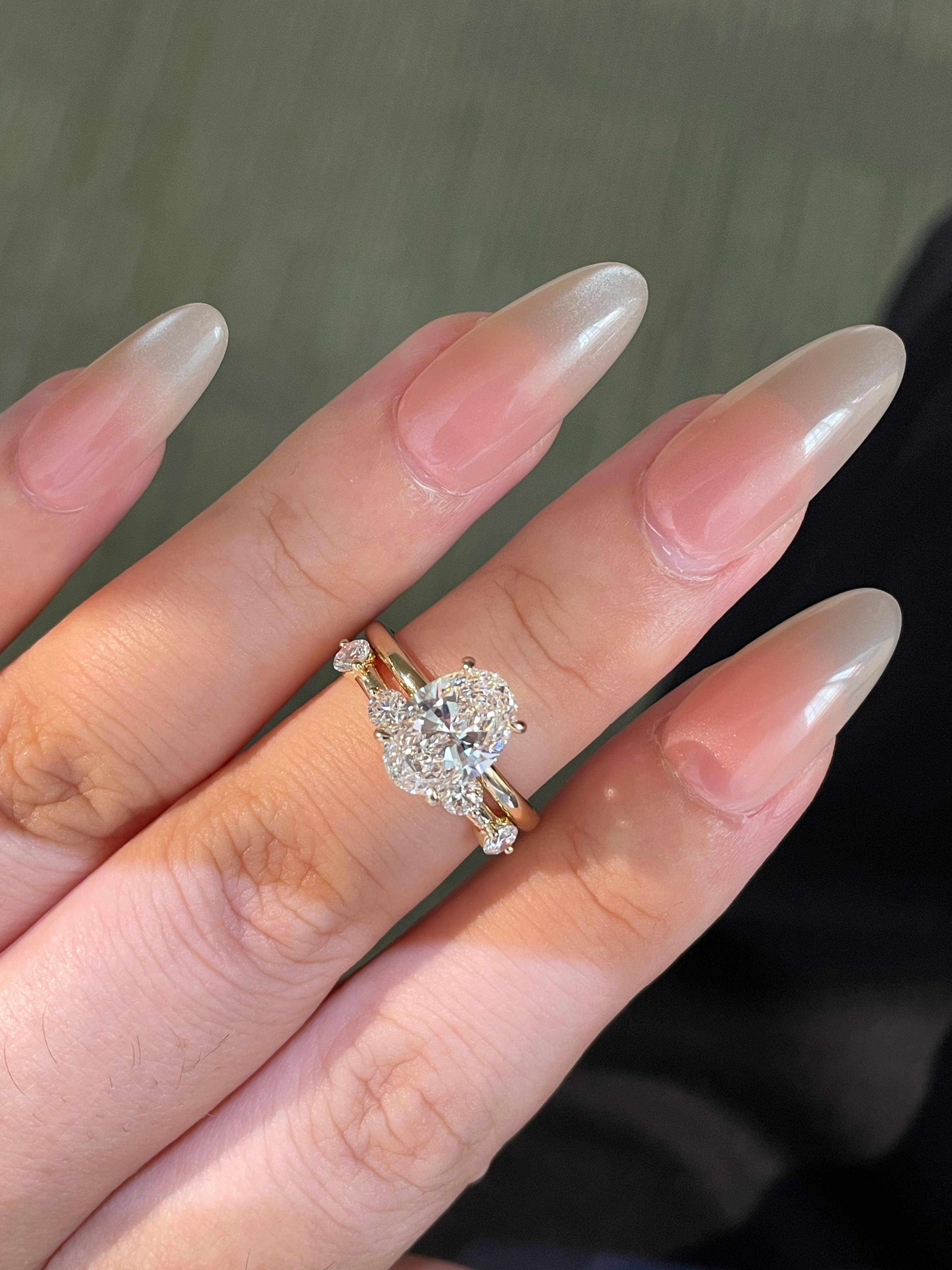
Direct from a real custom jewelry factory — CAD approval before production, private project tracking

How Much Does Custom Jewelry Cost?

Quick answer

The cost depends on metal, gemstones, weight, design complexity and the manufacturing process. A simple cast band costs far less than a pavé piece that needs detailed CAD work and hours of hand stone setting. Every piece is custom, so we quote per project — this page breaks down exactly what drives the price before you ask.

Fee schedule below is real factory data.The labor, wastage and service figures come from our actual processing fee sheet, published per category. Material is quoted live at market.§10-2 · Real factory labor rates · material priced live at market

What actually determines the price

Custom jewelry pricing looks mysterious from outside because workshops quote vague ranges. From inside a factory, the number is built from five variables. Understanding them lets you steer your budget like a dial — every choice below trades something, and none of them is a trick.

1 · Metal: type, then weight

Metal cost is price-per-gram times grams — which is why weight is the silent factor. A chunky signet in 14k can carry several times the metal of a dainty band in the same alloy. This is also where honest factories differentiate: hollow construction saves metal (and cost) but dents harder to repair; solid costs more and lasts a lifetime of resizing.

2 · Gemstones: the exponential variable

Center stones behave like retail gems — quality tiers multiply price. But stone count matters just as much on custom work: every set stone is bench time. A piece with forty small pavé stones can need more setting labor than a piece with one respectable center. Lab-grown and natural affect gem cost, not the labor.

3 · Design complexity: hours of bench time

Casting replicates geometry almost free; hand-fabrication bills by the hour. Openwork that needs supports, flush settings that need precision boring, mismatched stones that must each be seated by hand — complexity is not 'fancier looks better', it is a count of operations that cannot be templated.

4 · Process route: cast, fabricate, or mix

Lost-wax casting is the workhorse for custom: CAD once, cast a complete form, finish by hand. Fully hand-built work (forged shanks, bezels made from sheet) is slower and pricier but unbeatable for repairable, heirloom construction. Many pieces use both — a cast body with hand-set stones and hand-finished surfaces.

5 · Finishing and QC depth

Polishing grades, plating (rhodium on white gold), engraving, photography of the finished piece, insurance on shipment — the last ten percent of the timeline is a stack of small bills that protect the first ninety percent. Cheap operations skip here first; that is why identical-looking pieces from different workshops can carry different risk.

How a price is built: material + labor + wastage + service

A custom quote is not one number — it is four parts itemized. Material (metal and stones) is quoted live at market rates; labor, wastage and service are our actual factory fee schedule, published per category below. Labor is the real bench charge, not a retail markup.

Every quote is built from four components:

1Material

Metal (9K/14K/18K gold, PT950 platinum, 925 silver) priced by weight × the day's metal price; gemstones (lab-grown or natural diamonds) priced by carat, quality and certificate. Quoted live at market — never a fixed number on this page.

2Labor

The processing fee per piece by category, style and metal — the figures in the table below. This is the workshop's actual charge.

3Wastage

A percentage of metal consumed in casting and finishing (typically 12–15%), billed on the metal actually used. Each labor row lists its wastage rate.

4Service & extras

Second operations and handling: model-making, two-tone, flower-cut, micro-setting, plating, spray/sandblast, diamond risk fee and customer-supplied-metal make-up fees — itemized below.

1 · Material — quoted live, not fixed here

Metal and stones follow the market on the day of order. The same-day gold price is locked at order and held for 3 days; if stones are not delivered within that window the metal is re-priced.

MaterialPricing basis
Gold 9K / 14K / 18KWeight × same-day gold price
Platinum PT950Weight × same-day platinum price
925 silverWeight × same-day silver price
Lab-grown diamondsCarat + 4C + certificate, market tier
Natural diamondsCarat + 4C + certificate, market tier
Melee (<3pt, factory-supplied)¥4,000 / carat

2 · Labor — actual processing fee by category

MetalCategoryStyleLabor feeWastage
18K GoldPendantStandard$10 (¥70)12%
18K GoldWomen's ringStandard$10 (¥70)12%
18K GoldWomen's ringMirror-shine$21 (¥150)13%
18K GoldMen's ringStandard$28 (¥200)15%
18K GoldCouple ringSingle$11 (¥80)13%
18K GoldEar studStandard$13 (¥90)12%
18K GoldEarringStandard$15 (¥110)12%
18K GoldBraceletDelicate$17 (¥120)13%
18K GoldBraceletStandard$32 (¥230)13%
18K GoldBraceletBezel-set$49 (¥350)14%
18K GoldChain setStandard$17 (¥120)13%
18K GoldBangleStandard$49 (¥350)14%
Platinum PT950PendantStandard$17 (¥120)14%
Platinum PT950Women's ringStandard$17 (¥120)14%
Platinum PT950Men's ringStandard$42 (¥300)15%
Platinum PT950Couple ringSingle$18 (¥130)14%
Platinum PT950Ear studStandard$18 (¥130)14%
Platinum PT950EarringStandard$21 (¥150)14%
Platinum PT950BraceletStandard$44 (¥320)14%
Platinum PT950BraceletBezel-set$56 (¥400)15%
Platinum PT950Chain setStandard$22 (¥160)14%
Platinum PT950BangleStandard$63 (¥450)15%
PremiumPendantStandard$17 (¥120)13%
PremiumWomen's ringStandard$17 (¥120)13%

Special-process labor

ProcessCategoryLabor feeWastage
Moving-flower · singlePendant$19 (¥140)13%
Moving-flower · doublePendant$25 (¥180)14%
Moving-flower · twinPendant$25 (¥180)14%
Traditional craftPendant$21 (¥150)14%
Traditional craftChain set$25 (¥180)14%
CNCMen's ring ≤7g$32 (¥230)15%
CNCMen's ring >7g$42 (¥300)15%
CNCCouple ring$19 (¥140)15%

Chain sets add ¥15/piece (labor already includes flower-cut).

3 · Wastage — metal consumed in making

Wastage is charged on the metal actually used (see the % in each labor row). For customer-supplied metal a make-up fee applies: gold = metal used × wastage × 0.755; platinum = metal used × wastage × 0.955.

4 · Service & extras — second operations

OperationFee
Two-tone 18K$4 (¥30) / piece +1%
Standard flower-cut$4 (¥30) / piece +1%
Diamond-base flower-cut$6 (¥40) / piece +1%
Scale flower-cut$7 (¥50) / piece +1%
Mirror-shine flower-cut$7 (¥50) / piece +1%
Six-around-one$1 (¥5) / stone +1%
Eight-around-one$1 (¥5) / stone +1%
Fancy-shape flower-cut$7 (¥50) / piece +1%
Standard separate parts$3 (¥20) / piece
Beaded edge$3 (¥20) / piece
Magnetron gold coating$3 (¥20) / piece
Yellow-gold plating$4 (¥30) / piece
Mold cast-in$1 (¥5) / stone
Fancy-diamond micro-setting$1 (¥6) / stone
Model-making · standard$11 (¥80) / piece
Model-making · luxury$28 (¥200) / piece
Model-making · premium$49 (¥350) / piece
Back sealing$3 (¥20) / piece
Customer chain matching$1 (¥5) / piece

Spray / sandblast (by item)

Pendant$3 (¥20) / piece
Women's ring$3 (¥20) / piece
Couple ring$3 (¥20) / piece
Men's ring$4 (¥30) / piece
Earring$3 (¥20) / piece
Bracelet$4 (¥30) / piece
Bangle$6 (¥40) / piece

Diamond risk fee (by center-stone carat)

0.5 ct+$4 (¥30)
0.70 – 0.99 ct+$7 (¥50)
1.00 – 1.49 ct+$14 (¥100)
1.50 – 1.99 ct+$28 (¥200)
2.0 ct+$56 (¥400)
3.0 ct+$83 (¥600)

Reading the fee schedule

  • Diamonds under 3 points are factory-supplied; melee is billed at ¥4,000 per carat.
  • A diamond risk fee is added by center-stone carat (see the risk-fee table).
  • Customer-supplied metal incurs a make-up fee: gold = metal used × wastage × 0.755; platinum = metal used × wastage × 0.955.
  • The same-day gold price is locked at order and held 3 days; if stones are not delivered in that window the metal is re-priced.
  • Luxury styles (40+ stones) add ¥20/piece; fully hand bezel-set styles are quoted separately.
  • Payment terms: settled on shipment.

US$ figures are indicative at 1 USD ≈ 7.2 CNY and are not a quote commitment; final price follows the day's metal and stone prices and the exchange rate at order.

Two gold rings, two very different cost structures: real projects

The fastest way to internalize the five factors is real production records. These two pieces both started as customer materials, both came through the same stations — and their cost structures look nothing alike:

CASE-001Hand sketch → real pieceRing

Promise ring: hand sketch to twisted-band ring
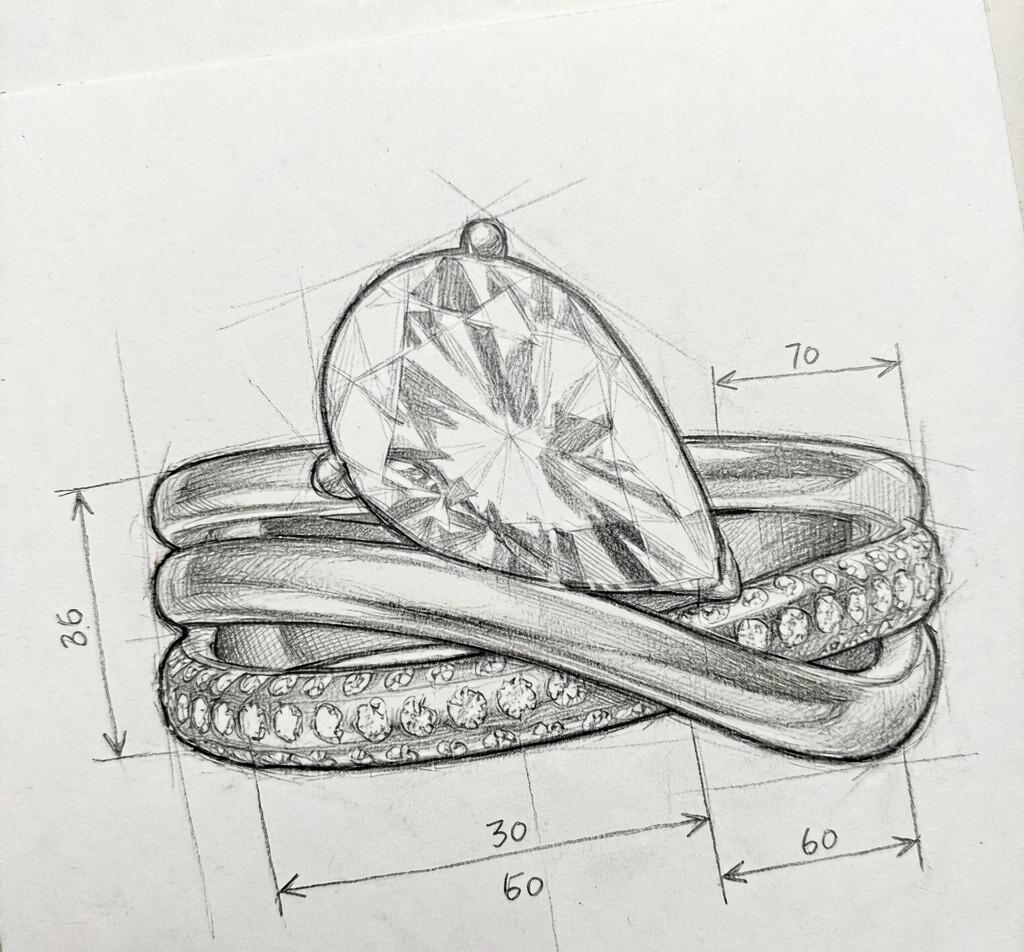
CASE-001 customer sketch — original input
1 · Your input (sketch)
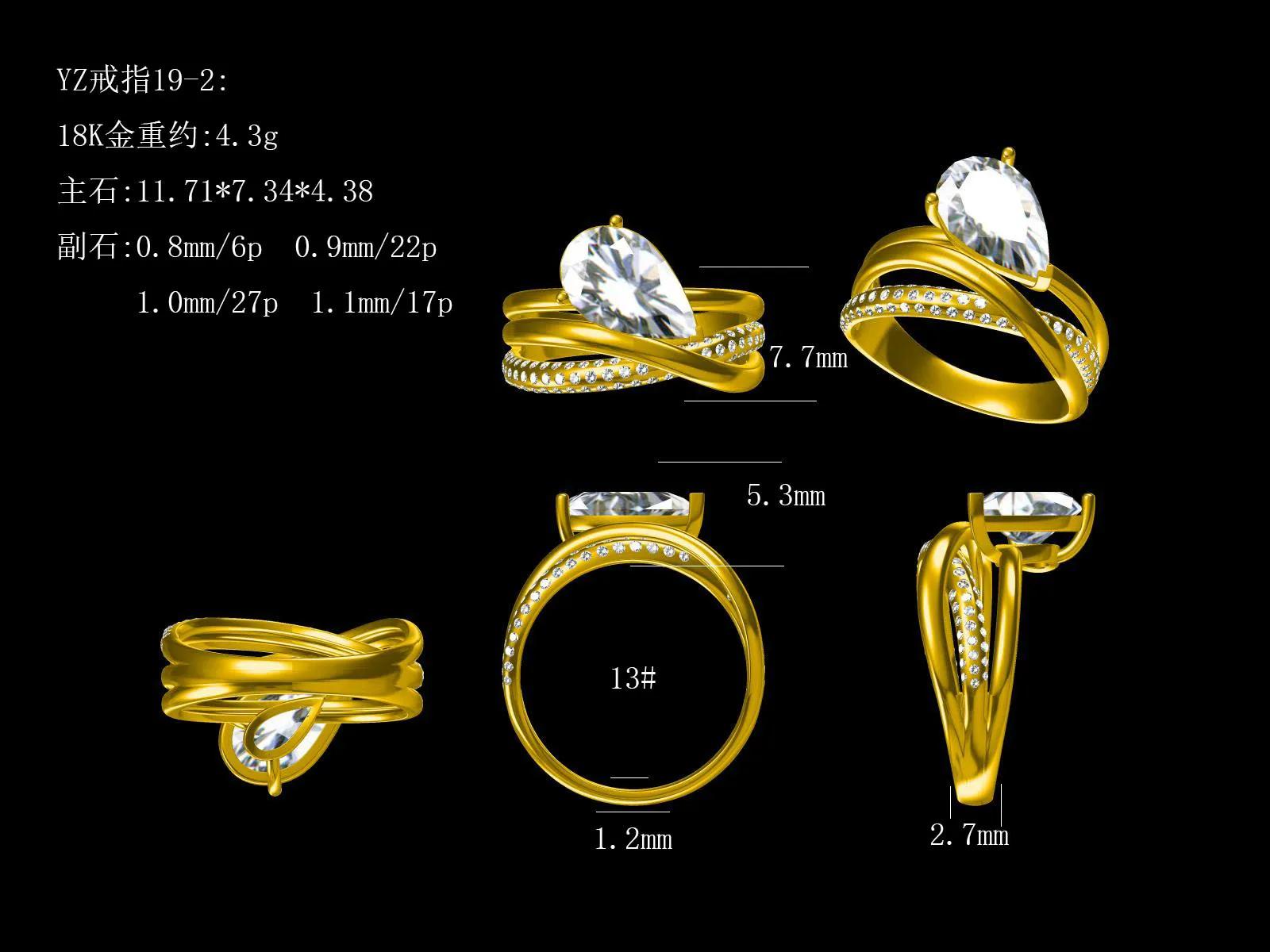
CASE-001 CAD design render
2 · CAD — approved before production
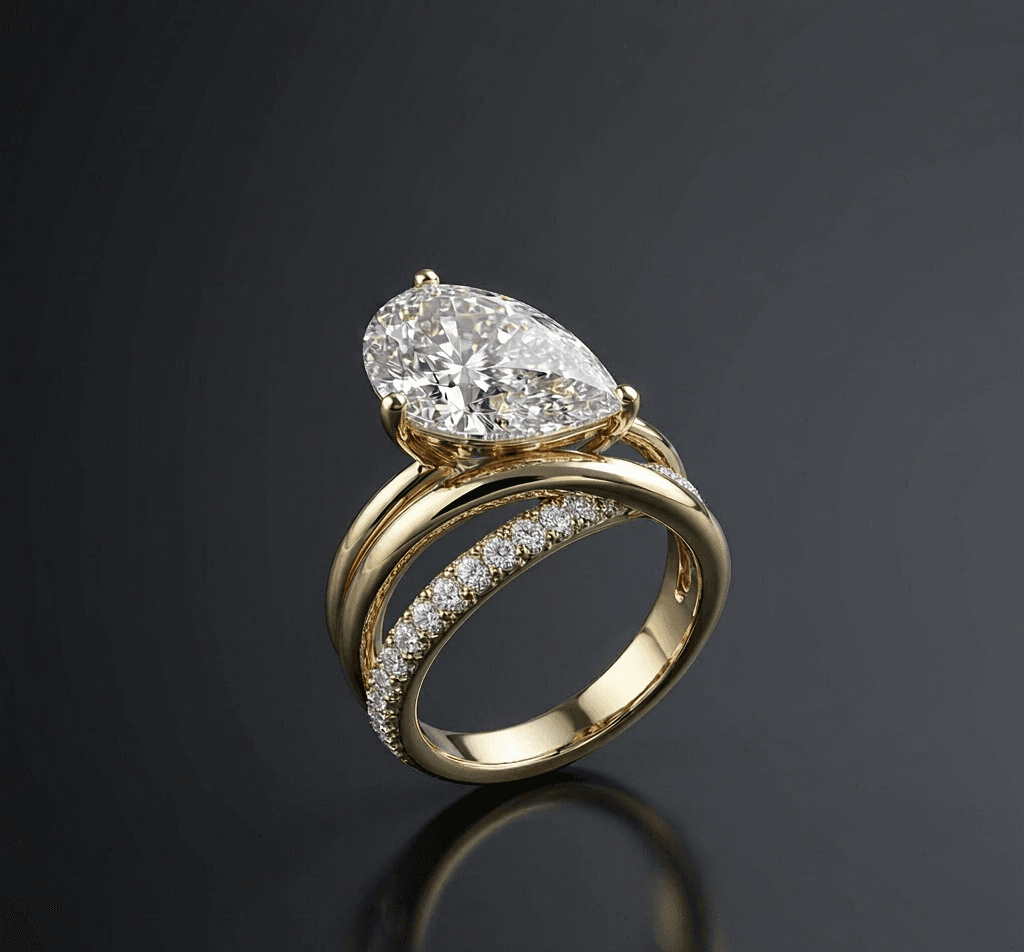
CASE-001 3D realistic render preview
2.5 · 3D realistic preview ↗
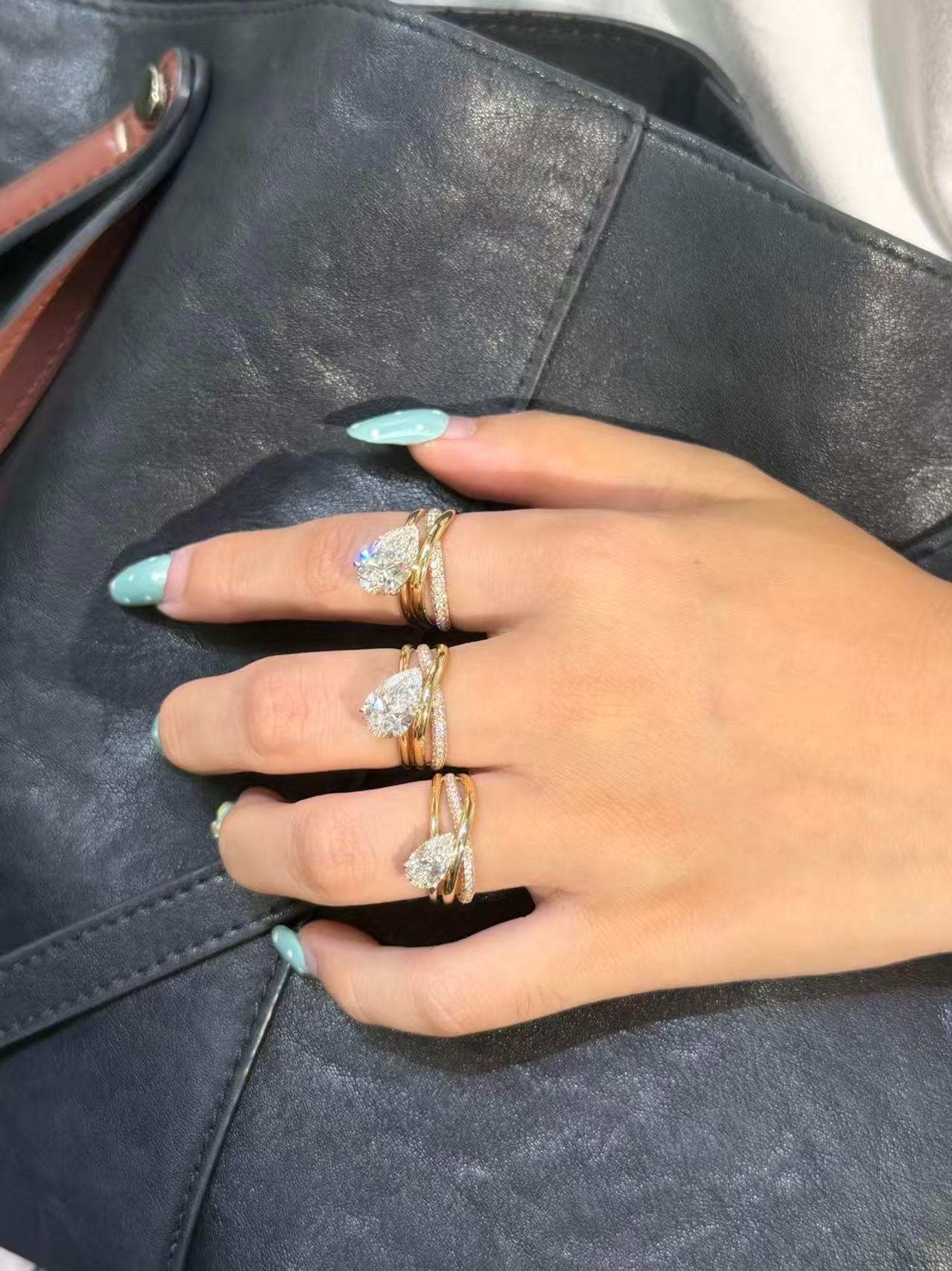
CASE-001 finished jewelry real photo
3 · Real finished piece

Finished piece · video

The manufacturing problem: The hand sketch showed a continuous twisted band, but an unsupported twist snaps during casting. Our CAD team rebuilt it as a closed double-rail braid and thinned the profile to 1.8 mm so the twist reads visually while staying castable.

Cost shape: 18K gold, a large pear centre and a full pavé twist — the money sits in the centre stone and the ~70 hand-set melee along the braid, not in gold weight alone. Casting the twist as one closed braid kept the metal work in casting economics instead of hand fabrication.
CASE-002Reference photo → real pieceRing

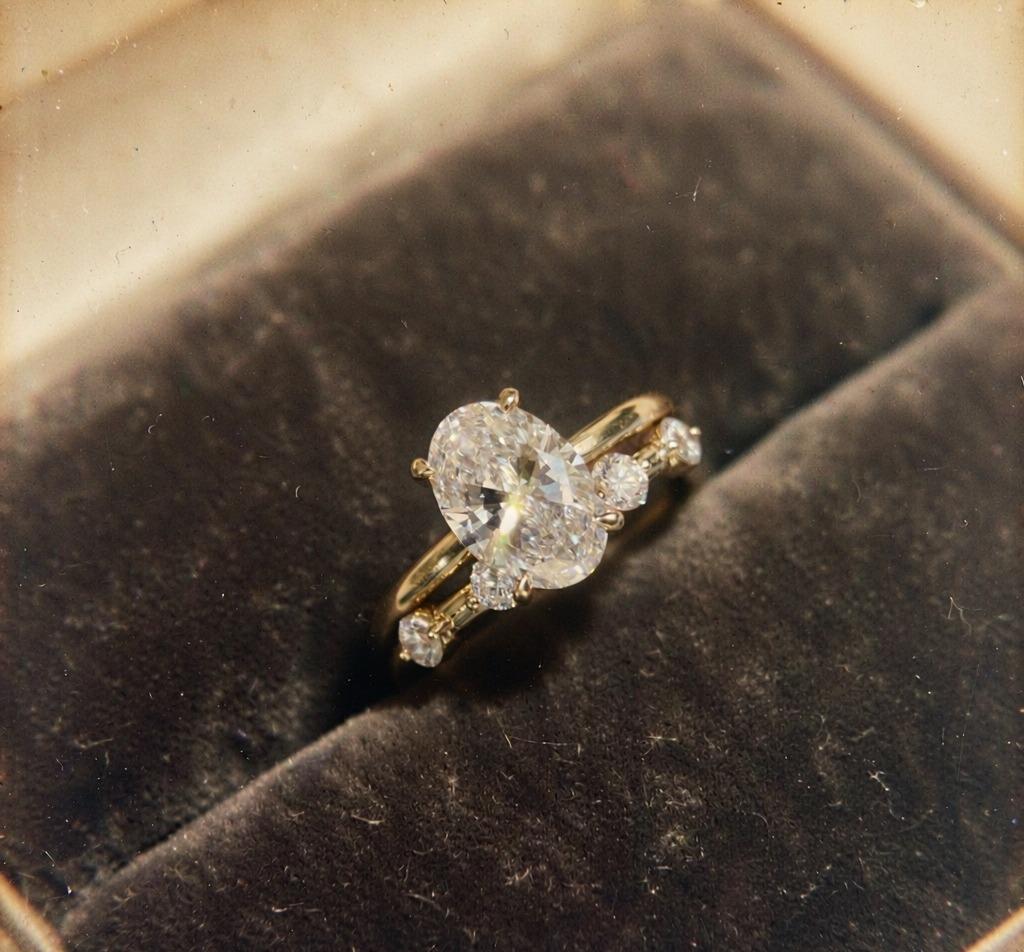
Oval engagement ring: a reference photo to a 9K gold rebuild with matching band

CASE-002 customer reference image — original input
1 · Your input (reference image)
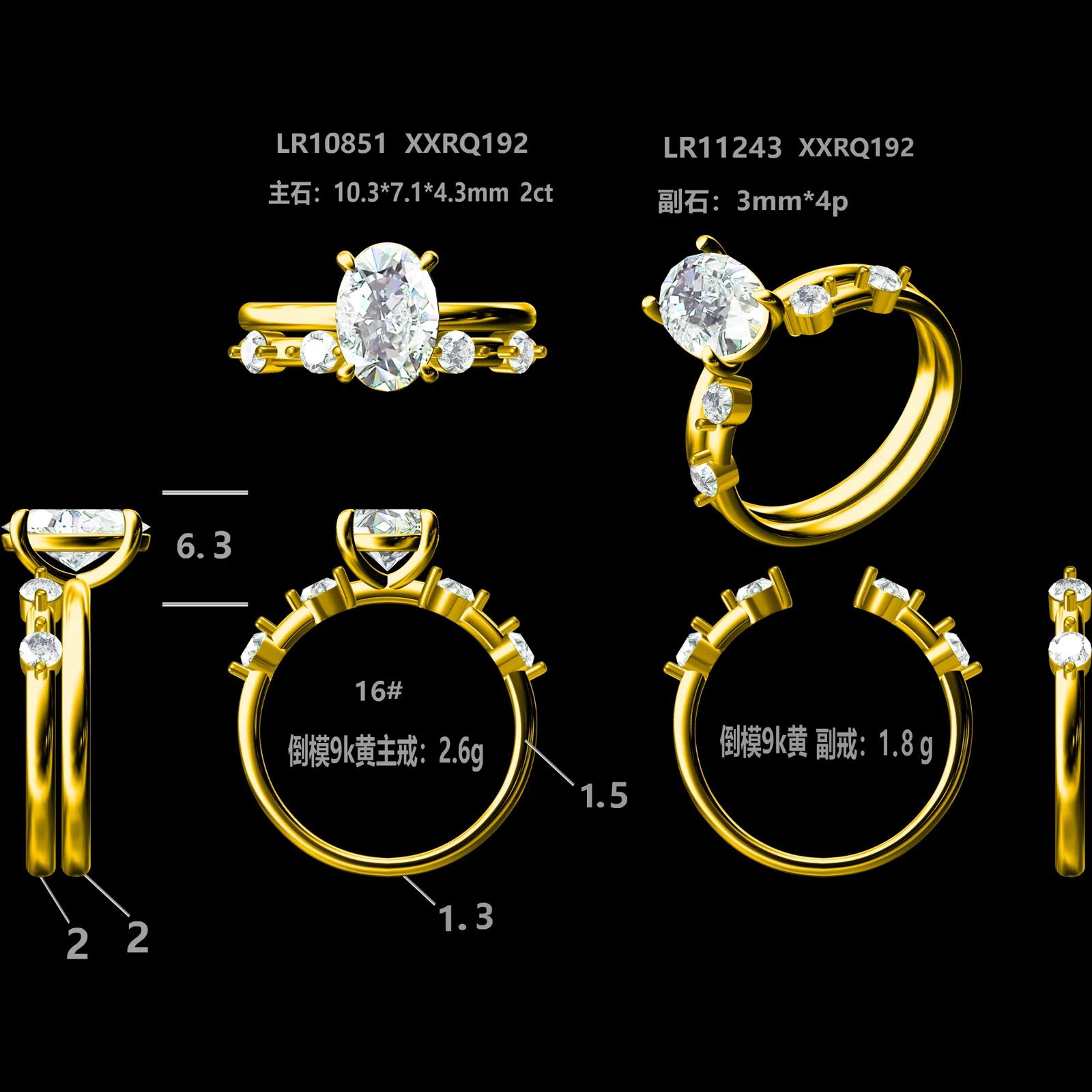
CASE-002 CAD design render
2 · CAD — approved before production
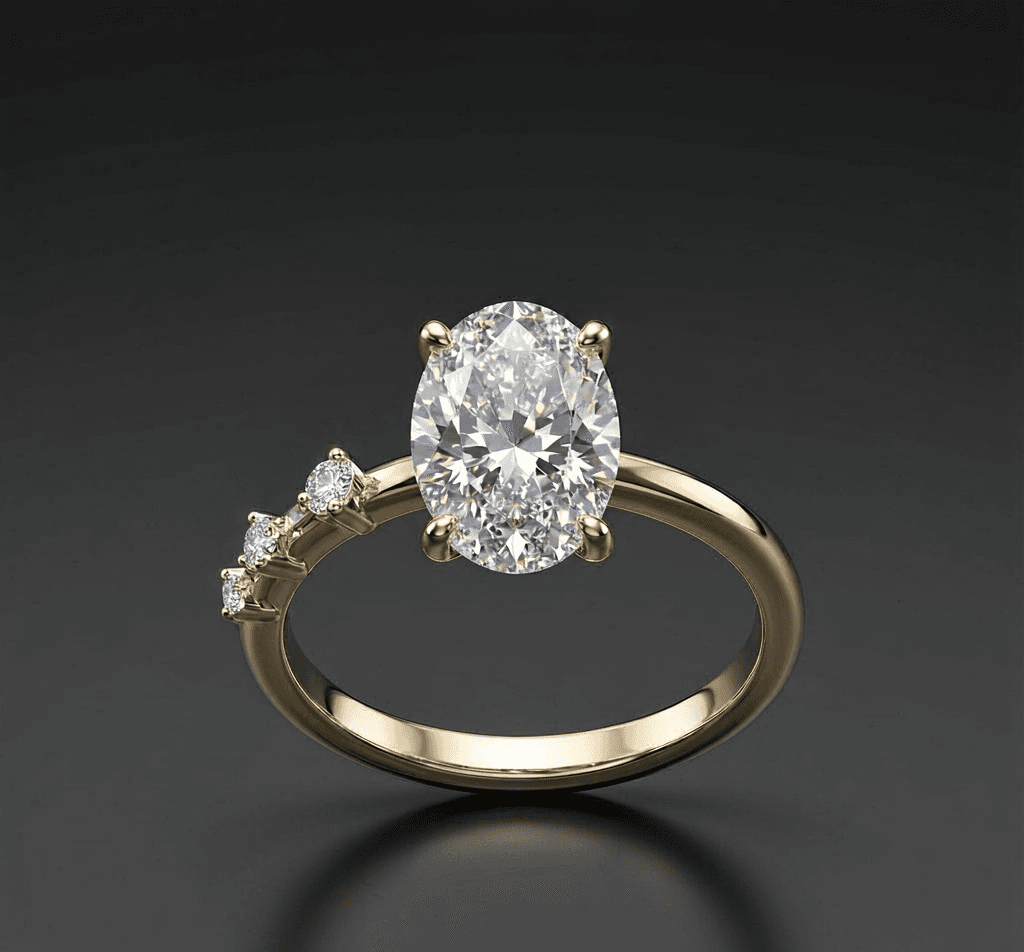
CASE-002 3D realistic render preview
2.5 · 3D realistic preview ↗
CASE-002 finished jewelry real photo
3 · Real finished piece

Finished piece · video

The manufacturing problem: The reference was a worn photo of an oval diamond ring, and a flat image carries no millimetres — basket height and seat depth were guesswork. We rebuilt the setting around the customer's 2ct oval, raised a low clean basket so the companion band sits flush beneath it, and matched the four shoulder stones to an even height, then the customer approved the CAD before any metal was cast.

Cost shape: 9K gold, one big oval and a matching band — lower gold content per gram than the 18K piece, so the cost leans on the centre stone and setting a matched pair, not on engraving. A blurry photo reference also added CAD read-back time that a clean drawing would not.

Why our estimates hold up

Because the same people quoting your piece are the people building it. A trading house quotes what the market will bear; we quote metal weight from the CAD model, bench hours from the process plan, and stone grades from the supplier list we actually buy from. When something changes mid-project, you get a reason with the number, not silence with a surcharge.

That also means we say no: if your design cannot be built to last at your budget, we will show you the modification that gets closest — which is worth more than any price list. Explore our factory to see the stations your quote passes through.

Where you can save — and where saving hurts

Real savings

  • Silver or 9k/10k instead of 14k/18k when the design reads by shape, not by metal
  • Fewer, better stones instead of many small ones (lab-grown center for visible quality)
  • Casting-friendly geometry: closed forms, even wall thickness, no trapped undercuts
  • Standard finishes where no one sees the back of the piece

False economy

  • Thinning load-bearing sections (prongs, rings rails) to save grams — snapping risk costs more later
  • Skipping QC photos — you want proof of what left the bench before it ships
  • Hollow construction on pieces you will wear daily — dents are not warranty material
  • A workshop 30% cheaper with no approval gate — custom without approval is gambling

Cost questions, answered like a factory

Why is custom jewelry sometimes cheaper than store-bought?+

There's a structural reason a well-planned custom piece can come in under a store lookalike — and honest cases where it won't. We lay out that reason on the questions page.

Full answer on our Questions page
Can you give me a price from just my sketch?+

We can give a first bracket, yes — an experienced workshop reads a sketch and knows whether it is a two-hour piece or a twenty-hour piece. A firm number comes after the first exchange about size, metal and stones, because those three variables are usually what moves the price, not the drawing.

Do you charge for CAD revisions before approval?+

The answer runs through our approval gate, and there's a real line between what's included and what is chargeable. Where that line sits — and the other fees to watch for — is on the questions page.

Full answer on our Questions page
What is the cheapest way to get a custom piece made?+

A few specific choices move the price more than anything else, and some of them backfire when pushed too far. We name each lever, and where cutting back hurts, on the questions page.

Full answer on our Questions page
Are there hidden costs I should watch for?+

Most surprises trace to a small set of second operations and shipping terms a first quote doesn't always cover. How an honest factory states each one up front is on the questions page.

Full answer on our Questions page
How much does custom jewelry cost?+

There is no single number, because a custom piece is priced per project from five variables — metal by weight, gemstones, stone count and setting labor, design complexity, and finishing depth. That is why the ranges on this page are being filled from our own production records instead of invented ones.

Want the number for your piece?

Send the design image you have. You will get a feasibility answer and an estimate built from metal, stones and hours — not from a mood board.